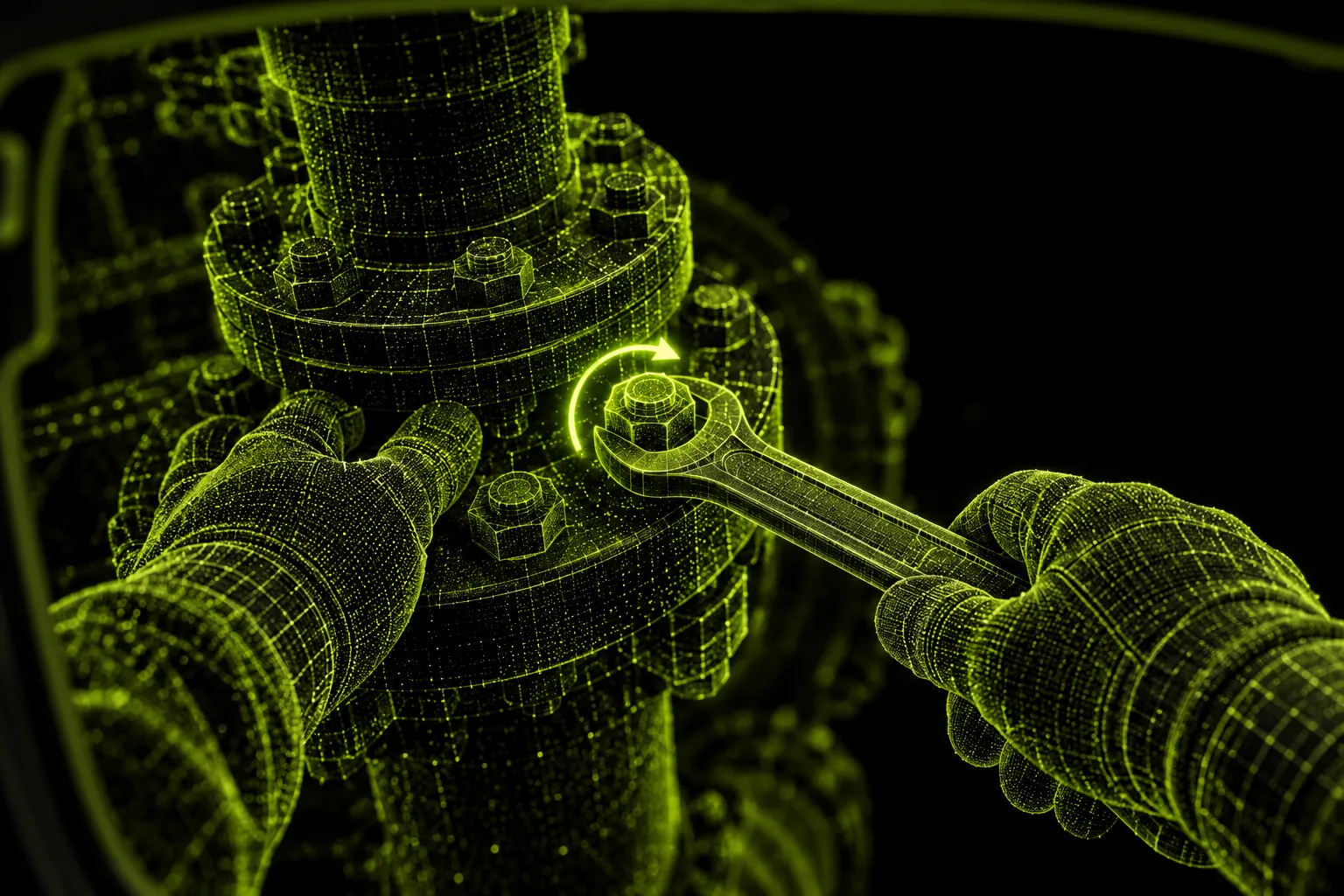
Picture a technician halfway through a repair who needs one fact: a torque value, a part number, what the last person changed. Today the answer is on a phone or a laptop, and getting to it means stepping out of the work.
One question, five steps
Count them. Put the tool down. Aim the camera, or find the screen. Type the question. Read the answer. Pick the tool up again. None of those steps is the work; all of them are the cost of asking.
On glasses, the same question is zero steps away. You ask out loud, and the system already sees what you see. Your hands stay on the work, and the time that went into the detour goes back into the task.
Why the detour matters more than it looks
A few seconds per question sounds small. But in hands-on work, the cost of asking isn't only time. Gloves come off, the place in the procedure is lost, attention leaves the part. The likely result is that people ask less often than they should, and rely on memory instead of checking.
Software has been designed for people at desks. Every screen assumes your hands and eyes are free. Most work in the physical world doesn't meet that assumption.
What changes when the interface is in the task
First-person context is the quiet one. A text box knows nothing until you describe the situation; glasses start from the situation itself. "What is this?" becomes a complete question.
The last two are about honesty. AI will sometimes be wrong or unsure, so the path to a person has to be one sentence away. And today's displays are only a step toward guidance placed on the equipment itself, which is the subject of our comparison of waveguides, prisms and passthrough.
Not a phone on your face
Smart glasses earn their place only if they stay out of the way. That's why our products capture only when asked, and why the first job of the interface is to keep attention on the world, not on the display. MEMO applies this to everyday life; MEMO Maritime to the engine room.
Glasses won't replace the phone for everything. They're for the moments when your hands are busy and your eyes are on the work. For many of the people who keep the physical world running, that's most of the day; more on that in What AI should give the people who fix things.
Your hands should not have to stop working to use software.