NO. 01 — APPLIED AI FOR SMART GLASSES

Intelligence for
the physical world.

We build spatial AI systems that see, remember, and guide people through the world around them.

EVERYDAY ASSISTANCE
LIVE

Assembling point cloud

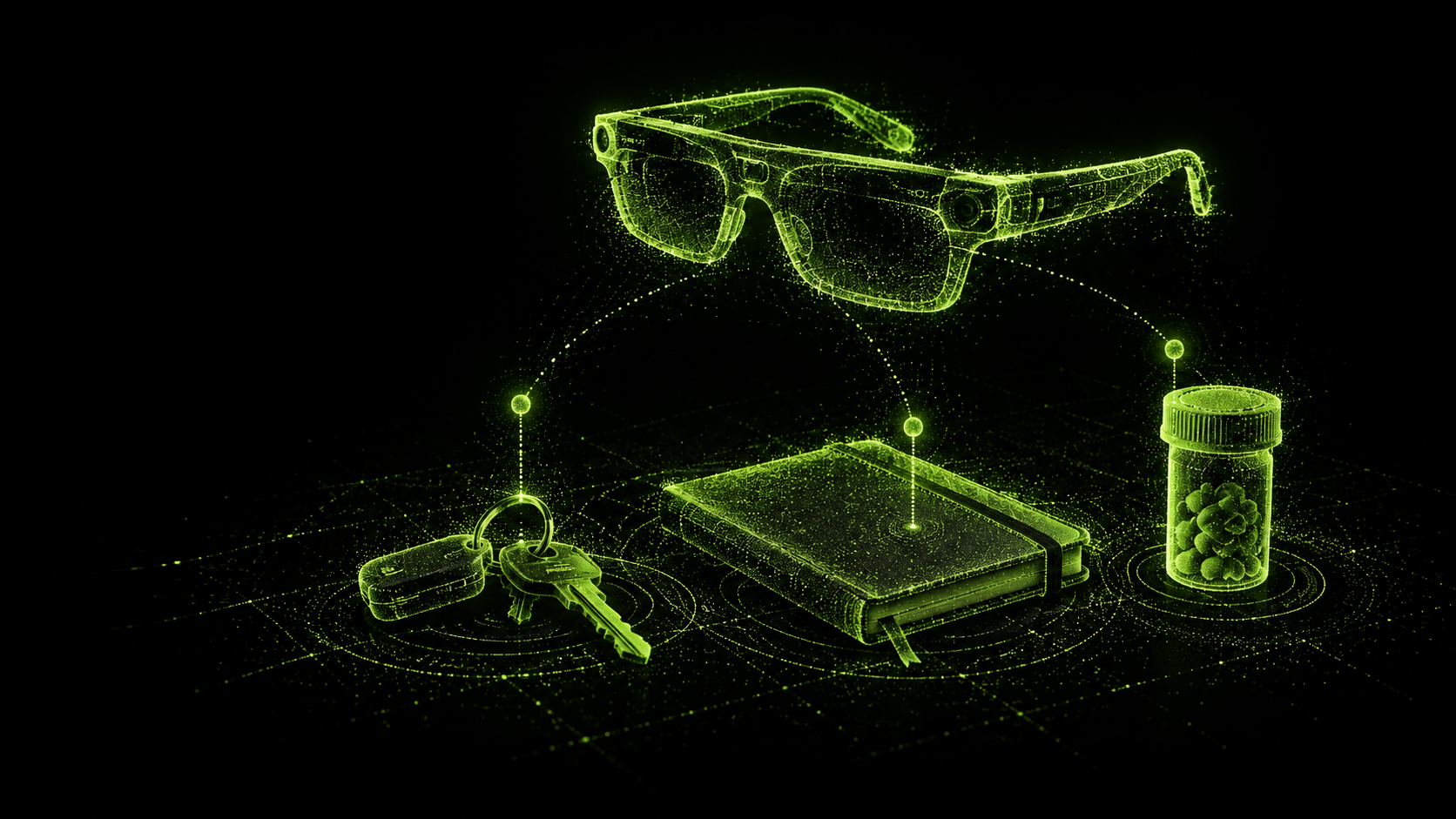
FIG. 01.01A
ACTIVE / 01 · KEYS

EVERYDAY ASSISTANCE — Remember what matters and get help when you need it.

01 OBSERVE THE REAL WORLD

02 GUIDE THE NEXT ACTION

03 REMEMBER WHAT MATTERS

NO. 02 — WHY SMART GLASSES

Hands stay
on the work.

Your hands should not have to stop working to use software. Spatial AI moves the interaction into the task: the system sees what you see, hears what you ask, and answers while you keep working.

01
02
03
04
05
Put the tool down
Aim the camera
Type the question
Read the answer
Pick the tool up
Screen first / today
Hands on work
Interrupted
Glasses first / Ruvi
Hands on work
Interrupted
Same question
Ask out loud. It already sees what you see.
Done
Time back on the work
Done
Time →
01
Put the tool down
02
Aim the camera
03
Type the question
04
Read the answer
05
Pick the tool up
Screen first
Work
Interrupted
Glasses first
Work
Same question
Ask out loud. It already sees what you see.
Done
Time back on the work
Done
One question / five steps away from the work
Interaction is a detour away from the physical world.
One question / zero steps away
Interaction happens inside the task, in the first person.
Glasses first / what keeps the line straight
01 / See

First-person context

The system starts from what you are actually looking at, not from a text box.

02 / Ask

Hands-free interaction

Capture and retrieve by voice while both hands stay on the work.

03 / Answer

Immediate information

Answers arrive in the moment of need, not after the task is interrupted.

04 / Escalate

Human assistance

When AI is not enough, escalate to a trusted person or remote expert.

05 / GuideRoadmap

Spatial guidance

Future displays place guidance directly in the field of view.

READ THE LONG VERSIONWhy smart glasses: one question, two traces

NO. 03 — PRODUCTS

One platform,
two products.

MEMO and MEMO Maritime apply the same physical-world intelligence to very different environments — everyday assistance and frontline work.

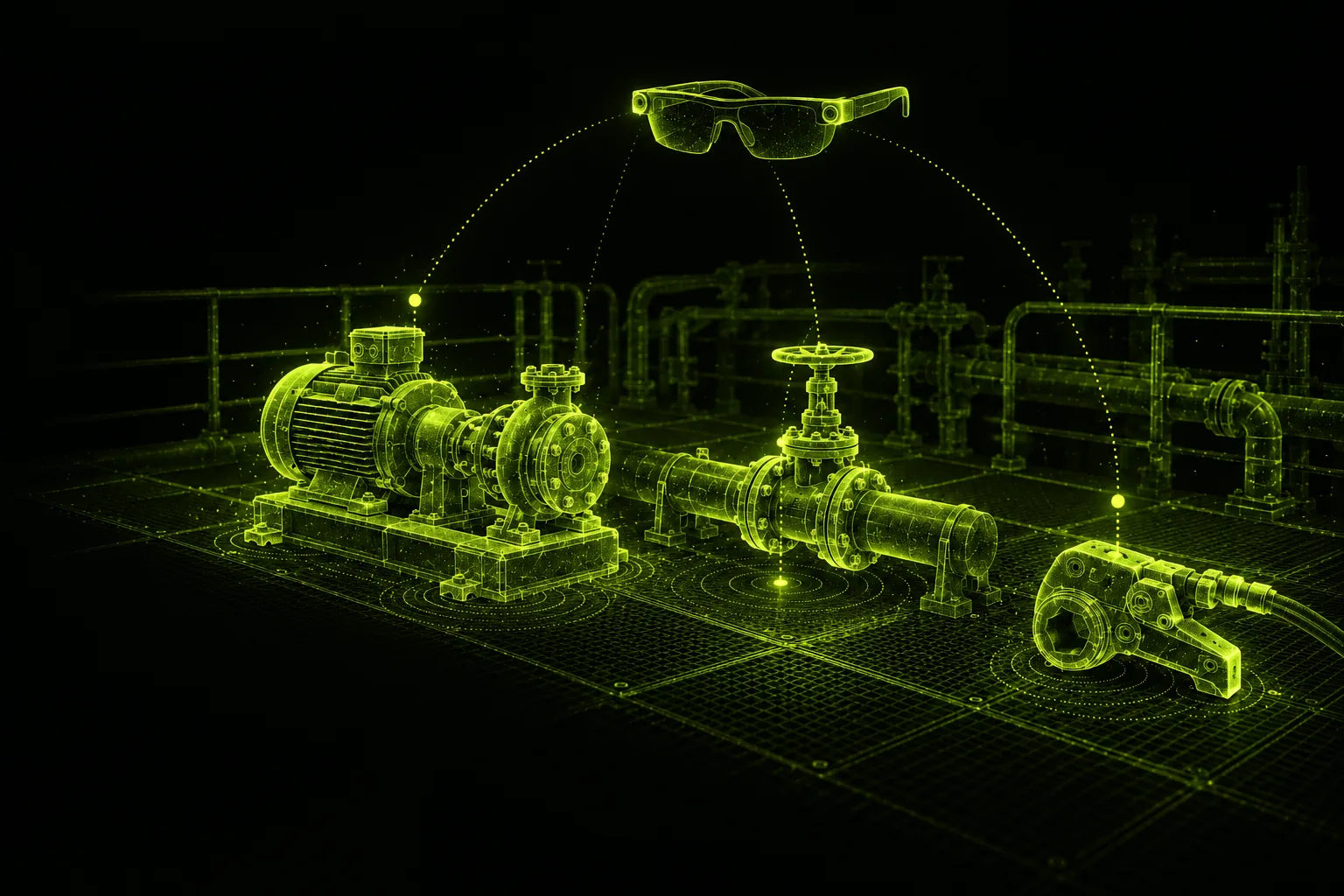
Point-cloud scan visual for MEMO

FIG. 03.01 — MEMO

PRODUCT / 01 — EVERYDAY ASSISTANCEEarly access open

MEMO

AI assistance for everyday life.

MEMO answers questions about what you are looking at, remembers the moments you choose, and connects you with a trusted person when AI is not enough.

  • “Where did I leave my keys?”
  • “What am I looking at?”
  • “How do I do this?”
  • “I need someone to help me.”
  1. See
  2. Remember
  3. Retrieve evidence
  4. Assist
  5. Trusted person
Explore MEMO
Point-cloud scan visual for MEMO Maritime

FIG. 03.02 — MEMO MARITIME

PRODUCT / 02 — FRONTLINE INTELLIGENCEPilots open

MEMO Maritime

Hands-free intelligence for frontline work.

MEMO Maritime helps marine technicians capture maintenance evidence while they work, and retrieve it — grounded in the source observation — when the next repair depends on it.

  • “What equipment am I looking at?”
  • “What is the correct procedure?”
  • “Is this the correct replacement part?”
  • “Can a senior technician look at this?”
  1. See equipment
  2. Understand context
  3. Retrieve manuals / history
  4. Provide guidance
  5. Remote expert if required
Explore MEMO Maritime

NO. 04 — RUVI TECHNOLOGY

Shared intelligence,
product by product.

MEMO and MEMO Maritime are not separate experiments. Both run on one stack that turns first-person perception into useful, evidence-grounded assistance.

01

See

First-person video, objects, environment, audio, and activity.

02

Understand

Multimodal reasoning about what is happening in the physical environment.

03

Remember

Store selected real-world moments and retrieve them later.

04

Know

Connect the current context with manuals, documentation, prior observations, and other knowledge.

05

Assist

Deliver useful information through a hands-free interface.

06

Escalate

Connect a trusted person or remote expert when AI confidence is insufficient.

FIG. 04.1 — THE SIX STEPS ABOVE AS ONE PIPELINE, SHARED BY BOTH PRODUCTS

HOVER OR TAP A LAYER TO INSPECT

NO. 05 — PROOF

Built in the real world.

Ruvi is not a concept deck. The platform has been built, tested, and demonstrated on working hardware.

02

Smart-glasses prototype

Hands-free interface

First-person interaction on wearable hardware.

03

Local multimodal AI

On-device architecture

Processing stays close to the field.

04

Visual memory

Evidence-linked recall

Answers grounded in source observations.

05

Voice interaction

Hands stay on the work

Ask and capture while working.

06

Remote assistance

Expert escalation

Human expertise when AI is unsure.

NO. 06 — WRITING

Latest from the lab.

View all writing
Essay

What AI should give the people who fix things

Most AI tools were built for people at desks. Built for hands-on work, AI can give technicians help in the moment, keep their know-how on record with their name on it, and give every next repair a head start.

Essay

Why smart glasses: one question, two traces

Asking software for help still means stopping the work. Smart glasses move the question into the task, and that changes who software can help.

NO. 07 — WORK WITH US

Build the next
interface with us.

We are looking for organizations willing to explore where hands-free, context-aware AI can solve real operational or human problems.

Based in Seattle, Washington. Working with maritime, field service, and hardware partners.

Connect on LinkedIn